Guide
How to Block Non-GamStop Casinos: A Practical Layered Plan for UK Players
GamStop is an important self-exclusion barrier, but it does not cover every gambling website that may be reachable online. This guide explains how to add practical layers, including device blocking, payment controls, account clean-up and an urge plan.
Betclear · October 16, 2026 · 7 min read
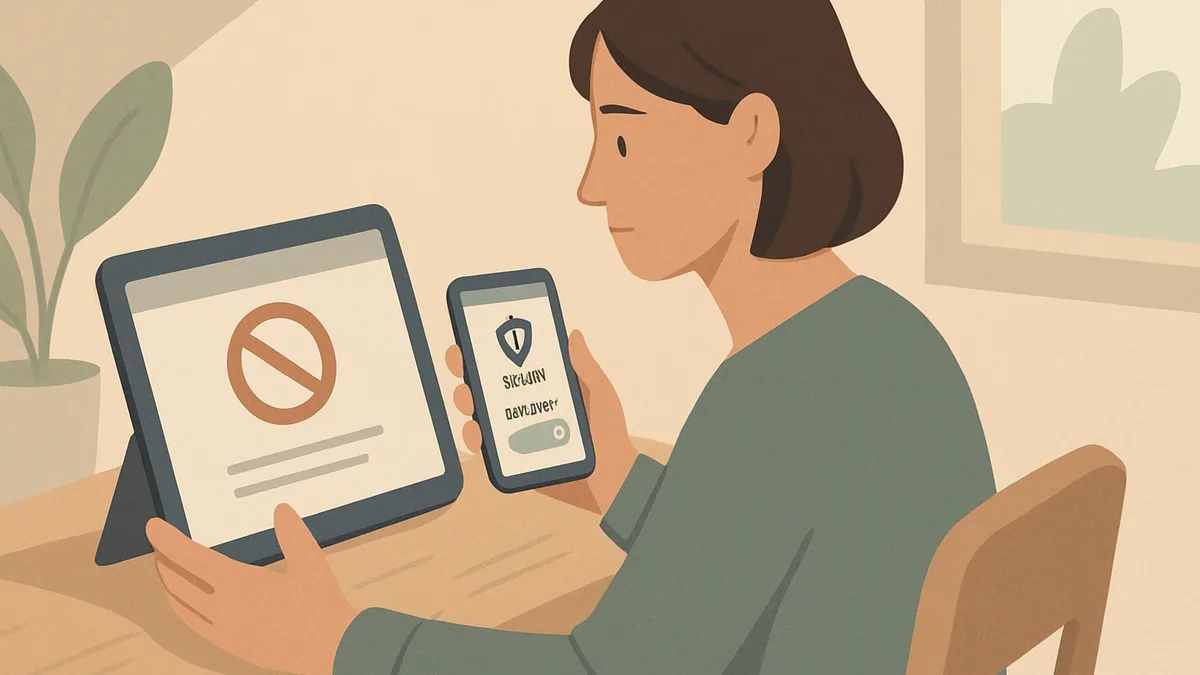
GamStop does not cover every gambling website
GamStop is a free online self-exclusion service that blocks access to gambling accounts, websites and apps covered by the scheme. It enables self-exclusion from participating online operators through a single request.
The Gambling Commission licenses remote gambling operators that offer or advertise services to people in Great Britain, and online operators are required to participate in GamStop. GamStop is therefore an important barrier, but it is not designed to remove every gambling website that may be reachable online.
Some casinos advertise themselves as “non-GamStop”. Do not treat that label as a reason to trust a site or as a sign that it is suitable for you.
A block works best as part of a layered plan rather than as a guarantee. Add other barriers that slow down access, such as device blocking tools, a bank gambling block where available, and support from someone you trust.
- Keep GamStop in place for accounts and services within its coverage.
- Remove saved gambling links, bookmarks and app shortcuts.
- Add blocking controls on each device and, where possible, your network.
- Ask your bank about a gambling-payment block.
- Tell a trusted person about the plan so they can help create a pause when access feels urgent.
If gambling is causing harm or feels difficult to control, consider seeking qualified support alongside these practical barriers. Support and treatment options are available for people affected by gambling-related harms.
Why non-GamStop casino adverts and links can still appear
GamStop is one barrier, not the whole plan. GamStop describes blocking access to accounts on gambling websites and apps, while the Gambling Commission also points to blocking software and guidance for limiting gambling-related social-media content.
A self-exclusion agreement requires a gambling business to close the account and remove a customer’s details from the marketing databases it uses. Treat that as separate from reducing the adverts, search results, emails and links that may still be visible on a device.
Seeing a casino advert or link is not a reason to treat it as safe or suitable. In Great Britain, a company that wants to advertise gambling services and accept bets from consumers must hold a Gambling Commission licence.
Reduce exposure straight away
- Unsubscribe from gambling marketing emails and delete the messages rather than reopening them.
- Use an app or platform’s ad controls to block or report unwanted gambling promotions when those controls are available.
- Remove casino bookmarks, delete saved passwords and sign out of gambling-related accounts.
- Avoid searching for casino names or terms such as “non-GamStop” during a possible moment of gambling. Choose a planned alternative activity instead.
- Ask a trusted person to help remove saved routes back to gambling, especially if doing it alone feels difficult.
Device blocking and a bank gambling block, where available, can add further friction alongside self-exclusion. If gambling is affecting your wellbeing, relationships or finances, seek qualified support alongside these practical barriers.
Build a layered block: start with the routes you use most
Treat blocking as a set of overlapping barriers, not a promise that access will be impossible. Start with the devices, payment routes and accounts that make gambling easiest to reach.
- Device blocking: BetClear provides setup steps for blocking gambling and betting sites on iPhone, Android, Mac or Windows 11.
- Bank controls: Ask your bank whether it can block payments to gambling websites and apps.
- Account clean-up: Remove gambling apps, saved passwords, saved payment details and bookmarks from the devices you use.
- Account closure: If you have made a self-exclusion agreement, check that the gambling business has closed the account and removed your details from its marketing databases.
- Another person: Tell someone you trust what you are putting in place, and ask them to help you stick with the plan when an urge arrives.
Use more than one layer so that a single gap does not become an easy route back in. GAMSTOP describes its service as a starting point and also points to device-blocking software and support.
If gambling is causing problems, consider seeking qualified professional support alongside these practical barriers. Support and treatment options are available for people affected by gambling-related harms.
Close the payment route as well
Ask your bank whether it offers a block on money going to gambling websites and apps. If it does, ask how the block works, whether it applies to your debit card, and what happens if you later ask to change it.
Where you feel comfortable, remove saved card details from gambling accounts, mobile wallets and browser autofill. Making payment less immediate can create a useful pause between an urge and a deposit.
Use a payment block as one layer of your plan, not the whole plan. Combine it with website and device barriers, and consider asking someone you trust to help you keep those barriers in place. If gambling is causing problems, seek qualified support as well.
Make existing accounts less easy to return to
Start by making a private list of the gambling accounts and apps you already know about. For each one, use the operator’s support route to ask about its available self-exclusion, account-closure and marketing controls. Gambling businesses are required to have their own self-exclusion arrangements, and a self-exclusion agreement requires the business to close the account, return money held in it, and remove the person’s details from its marketing databases.
Before changing an account, keep any information you may need about balances, transactions or support conversations. Rather than trying to remove an account in a way that could make records or remaining funds harder to access, ask the operator how it will handle closure and any money in the account.
- Delete gambling apps from each device.
- Sign out of gambling websites and apps, then remove saved usernames and passwords.
- Remove bookmarks, shortcuts and autofill details that create an easy route back.
- If it feels suitable and both of you are comfortable, ask a trusted person to hold device passcodes or account-recovery details for a while.
These steps are best used alongside other barriers, not as a promise that access is impossible. Gambling blocking software, a bank gambling block where available, and support can add further friction.
If gambling is affecting your wellbeing, relationships or finances, consider speaking with a qualified support professional or service. Support and treatment options are available for people experiencing gambling-related harms.
Create a plan for the moment you feel tempted
Decide what you will do before an urge arrives. Keep the plan short, specific and easy to follow when you do not want to make another decision.
- 1. Put your device in another room and step away from it.
- 2. Turn off private browsing, so you are not creating an easy route back to gambling sites.
- 3. Message or call someone you trust and say that you are having an urge.
- 4. Start a pre-planned, non-gambling activity and stay with it until the urge has had time to pass.
Write these steps in a phone note or make them your lock-screen reminder. The aim is to put the next helpful action in front of you before you start searching, installing apps or trying to bypass a block.
If gambling is feeling hard to manage, consider speaking with a qualified support professional about your options. Treatment and support are available for people experiencing gambling-related harms.
Can GamStop block non-GamStop casinos?
Not directly as a device-wide website block. GamStop Online provides self-exclusion from online operators through one request, while gambling-blocking software is a separate tool for blocking access to gambling websites.
Use both where possible: self-exclusion can remove access to covered gambling accounts, while a blocker can add another barrier on your devices.
Is a non-GamStop casino legal or safe for UK players?
Do not treat the label “non-GamStop” as a safety claim or as a reason to gamble. The Gambling Commission issues licences to gambling operators, but this FAQ cannot determine the legal status or safety of an individual website.
If you are unsure about a site, pause before depositing or sharing information and seek qualified support if gambling is causing problems.
Will a gambling blocker stop every casino?
Treat a blocker as a useful layer, not a guarantee.
The stronger practical approach is to combine device blocking with any available bank controls and a conversation with someone you trust.
What should I do if I keep finding new sites?
- 1. Add another blocking layer rather than relying on one setting.
- 2. Review browser and app settings, and reduce gambling-related advertising exposure where you can.
- 3. Ask your bank about available controls that block payments to gambling websites and apps.
- 4. Tell someone you trust what is happening and ask them to help you keep the barriers in place.
- 5. Seek qualified support if gambling is affecting your finances, relationships or wellbeing.
BetClear is a gambling website blocker, not a medical service. If you need clinical or crisis support, please contact a qualified professional or a responsible-gambling helpline.